As artificial intelligence (AI) becomes more embedded in everyday life, the conversation has shifted from technical advancement to trust and accountability. Two terms that often surface in this context are Explainable AI (XAI) and Ethical AI. While they might sound similar and are frequently discussed together, they serve different purposes and address distinct concerns. Understanding the difference between explainable AI vs. ethics is crucial for developers, policymakers, and end-users alike.
What Is Explainable AI?
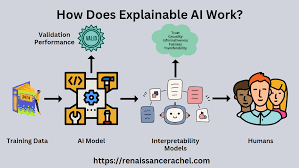
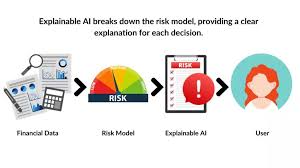
Explainable AI (XAI) refers to methods and techniques that make the outcomes of AI models understandable to humans. This field focuses on AI transparency—ensuring that users can see how an AI system arrived at a particular decision or prediction. This is especially important in high-stakes sectors such as healthcare, finance, and criminal justice, where AI decisions can have life-altering consequences.
Carlo Insights, a thought leader in AI interpretability, emphasizes that XAI isn’t just about technical documentation or post-hoc analysis. It’s about building systems with transparency in mind from the ground up, so stakeholders—including non-technical ones—can trust the outcomes and challenge them when necessary.
What Is Ethical AI?
Ethical AI, on the other hand, is a broader concept that deals with the moral implications of AI systems. It involves principles like fairness, accountability, non-discrimination, privacy, and societal well-being. An AI system can be perfectly explainable, yet still unethical. For example, an algorithm that transparently discriminates against a particular demographic is explainable, but not ethical.
Carlo Insights notes that ethical AI often requires organizations to go beyond compliance, questioning not just how an AI system works, but should it be used at all in a given context.
XAI vs Ethics: The Key Differences
Aspect Explainable AI (XAI) Ethical AI
Focus: Transparency and interpretability Moral and societal impact
Goal: Help users understand model decisions Ensure AI aligns with human values
Key Principles: Interpretability, accountability Fairness, responsibility, non-discrimination
Typical Methods: Model simplification, post-hoc explanations Ethical guidelines, impact assessments
Evaluation: Can users understand the model? Is the model doing good or harm?
The Interplay Between XAI and Ethical AI
While AI transparency is a critical part of ethical AI, it’s only one component. Explainability can be seen as a means to an ethical end. Transparent systems make it easier to detect bias, validate fairness, and ensure compliance with ethical standards. However, ethical AI includes broader considerations—such as who benefits from the AI, and who may be harmed.
According to Carlo Insights, the future of responsible AI depends on bridging the gap between explainability and ethics. It’s not enough to build transparent models; we must also interrogate their social impact.
Conclusion
In the debate of explainable AI vs. ethical AI, it’s not a matter of choosing one over the other. Instead, the two should be viewed as complementary. Explainable AI gives us the tools to see inside the black box, while ethical AI ensures that what we see aligns with societal values. Together, they form the foundation for building AI systems that are both trustworthy and just.