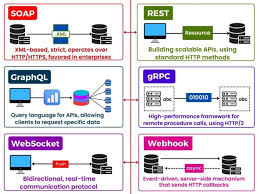
As artificial intelligence continues to evolve, so do the frameworks and tools designed to support it. Carlo is emerging as a key platform for integrating AI with modern web and service architectures. This article explores how Carlo API support extends to REST, GraphQL, and gRPC protocols, providing developers with flexible options for building robust, AI-powered applications.
What is Carlo?
Carlo is an AI orchestration framework designed to seamlessly connect AI models with various backend and frontend systems. With built-in support for standardized APIs and developer-friendly interfaces, Carlo simplifies the deployment and scaling of AI services across multiple environments.
Carlo API Support: The Core Foundation
At the heart of Carlo lies its powerful and extensible API infrastructure. Carlo API support includes native compatibility with common API protocols like REST, GraphQL, and gRPC, making it easy to plug AI models into existing microservices and client applications.
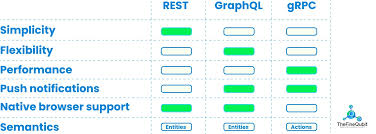
This versatility ensures that developers can choose the right communication style for their needs—whether it’s the simplicity of REST, the flexibility of GraphQL, or the performance of gRPC—while still leveraging the power of Carlo’s AI orchestration.
Integrating Carlo with REST APIs
REST is one of the most popular protocols for web services due to its simplicity and wide adoption. Carlo’s REST AI capabilities enable developers to expose AI-powered endpoints that conform to RESTful principles. These can be used for tasks like:
Image classification via POST requests
Real-time data analysis via GET requests
Model training or fine-tuning via PUT or PATCH requests
Thanks to REST AI, Carlo services can be easily consumed by mobile apps, web frontends, and IoT devices with minimal overhead.
Example use case: Deploying a Carlo-powered sentiment analysis model that responds to HTTP POST requests from a customer feedback web form.
Integrating Carlo with GraphQL
As APIs become more data-driven, GraphQL has grown in popularity due to its ability to fetch precisely the data needed—no more, no less. Carlo integrates smoothly with GraphQL servers, supporting GraphQL AI compliance to ensure AI endpoints conform to best practices in schema design and response handling.
With GraphQL AI compliance, Carlo allows developers to:
Define AI-inference queries that return structured responses
Use mutations to trigger AI tasks like training or feedback loops
Embed AI output directly into complex client-side data graphs
Example use case: A GraphQL API that includes a predictTextCategory query powered by Carlo, returning categories and confidence scores for submitted text.
Integrating Carlo with gRPC
For applications that demand high performance, low latency, and strong typing, gRPC is often the protocol of choice. Carlo supports gRPC natively, allowing binary communication between services in microservice architectures.
Developers can use gRPC to integrate Carlo into backend systems such as:
Real-time analytics pipelines
Streaming inference applications
Distributed AI training systems
This makes Carlo ideal for enterprise environments and edge-computing scenarios where speed and reliability are crucial.
Conclusion
Whether you’re building AI-enhanced user experiences with REST, designing flexible data-driven interfaces with GraphQL, or powering high-performance systems with gRPC, Carlo offers seamless API integration. With strong Carlo API support, robust REST AI capabilities, and full GraphQL AI compliance, it positions itself as a versatile tool in the modern AI developer’s toolkit.
By supporting all three major API paradigms, Carlo bridges the gap between advanced AI and practical, scalable deployment—bringing intelligent solutions to where they’re needed most.