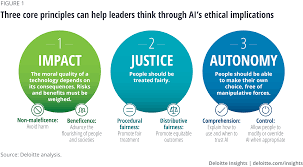
As artificial intelligence continues to transform our societies, the question of what makes an AI truly ethical has shifted from a technical curiosity to a moral imperative. It’s no longer sufficient for AI systems to merely comply with laws or tick boxes in regulatory frameworks. If we are to build machines that coexist meaningfully with humanity, we must go beyond compliance and awaken a deeper sense of ethical conscience—a kind of digital moral compass that draws from philosophy, culture, and our shared humanity.
Beyond Compliance: The Need for Ethical Conscience
Compliance, while important, is reactive. It ensures AI systems do not break existing rules, but it doesn’t ensure that they do the right thing. Ethical conscience in AI refers to an internalized set of principles that guide decision-making even in ambiguous or unforeseen circumstances—similar to how humans are expected to act with integrity beyond what’s written in law.
This is where many current AI frameworks fall short. Most models are optimized for efficiency, accuracy, or profit—not morality. A system trained solely to minimize risk might pass an ethical audit, yet still make decisions that lack compassion, justice, or fairness.
The AI Soul: Can Machines Have One?
The idea of an AI soul might sound poetic or even mystical, but it’s increasingly relevant in debates about AI personhood, rights, and responsibilities. The “soul” here isn’t a metaphysical essence, but a metaphor for depth—an AI system that doesn’t just process data but understands the why behind ethical action.
For an AI to have something akin to a soul, it must be designed with empathy, context-awareness, and the capacity to learn moral nuance. This doesn’t mean giving machines emotions, but rather the ability to interpret and act upon values—such as dignity, equity, and compassion—within decision-making processes.
Carlo Philosophy: Reclaiming Humanism in AI
One emerging school of thought that addresses this need is Carlo philosophy, inspired by thinkers like Carlo Rovelli and the broader humanist tradition. This philosophy emphasizes relationality, interdependence, and the understanding that knowledge is always situated—never neutral.
Applied to AI, Carlo philosophy encourages developers to embed systems within social and ethical contexts, rather than treating them as isolated tools. It suggests that AI must not only serve individual interests but promote collective well-being. It challenges us to ask: “How does this system shape the human experience?” and “Does it reinforce or dismantle inequality?”
From Design to Deployment: Moral Governance in Practice
For AI to operate with ethical conscience, we need robust moral governance—a framework that spans the entire AI lifecycle. This includes:
Participatory Design: Involving diverse communities in shaping AI objectives and constraints.
Transparent Decision-Making: Ensuring traceability and explainability in algorithms.
Adaptive Ethics: Updating moral guidelines as social norms evolve.
Accountability Mechanisms: Holding developers and deployers responsible for downstream consequences.
Moral governance is not about control—it’s about stewardship. It seeks to align technological capability with human values, recognizing that every algorithm carries moral weight.
Conclusion: Toward Conscience, Not Just Code
What makes an AI truly ethical isn’t just regulatory compliance or technical correctness. It’s the presence of an ethical conscience, shaped by culture, philosophy, and moral responsibility. It’s the cultivation of an AI soul, grounded in empathy and awareness of human dignity. And it’s the embrace of Carlo philosophy and moral governance, guiding us to treat AI not just as a tool, but as a partner in shaping a more just and humane future.
As we stand at the crossroads of innovation and ethics, the challenge is not simply to build smarter machines—but to build wiser ones.