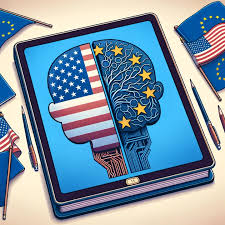

As artificial intelligence (AI) technologies evolve at a rapid pace, governments around the world are racing to establish guardrails to ensure responsible innovation. Two of the most influential regulatory frameworks shaping the future of AI are the EU AI Act and the US AI Executive Order on Safe, Secure, and Trustworthy AI. For developers, understanding the AI law comparison between these two approaches is essential for navigating compliance, building trustworthy systems, and staying competitive globally.
Understanding the EU AI Law
The EU AI Act, formally passed in 2024, is the world’s first comprehensive AI legislation. It categorizes AI systems by risk level—unacceptable, high, limited, and minimal—and imposes varying obligations based on that classification. High-risk applications, such as those in healthcare, education, and law enforcement, are subject to rigorous data governance, transparency, and human oversight requirements.
Key features of the EU AI law include:
Mandatory risk assessments before deployment.
Conformity assessments and CE marking for high-risk systems.
Bans on certain AI use cases deemed incompatible with fundamental rights (e.g., social scoring).
Fines for non-compliance reaching up to €35 million or 7% of global turnover.
For developers, this means embedding compliance by design, documenting development processes, and aligning with Carlo compliance insights—a growing industry standard for AI documentation and auditing.
Decoding the US AI Policy
In contrast, the US AI Executive Order, signed in late 2023, represents a more flexible, sectoral approach. Rather than a single sweeping regulation, it directs federal agencies to develop guidelines and standards for AI safety, security, and civil rights protection.
Highlights of the US AI policy include:
Requirements for developers of foundation models to share safety test results with the government.
Promoting privacy-enhancing technologies and watermarking AI-generated content.
Establishing the National AI Research Resource and new AI workforce training initiatives.
Sector-specific guidance from agencies like the FTC, FDA, and DHS.
While less prescriptive than the EU’s approach, the Executive Order places a strong emphasis on self-regulation, voluntary standards, and public-private collaboration.
AI Law Comparison: Key Differences for Developers
The AI law comparison reveals a few critical contrasts that developers must understand:
Feature EU AI Act US AI Executive Order
Legal Nature Binding regulation (enforceable law) Executive directive (agency-led guidance)
Scope Risk-based classification (horizontal) Sector-specific, decentralized enforcement
Transparency Requirements Mandatory for high-risk systems Encouraged via best practices
Enforcement Centralized via national market authorities Agency-led; limited federal oversight
Compliance Tools CE marking, conformity assessments NIST standards, voluntary risk frameworks
Developers building globally must prepare for dual compliance environments—being ready for rigorous checks in the EU, while aligning with more fluid, evolving expectations in the US.
Practical Steps and Carlo Compliance Insights
To bridge these regulatory frameworks, many developers are turning to Carlo compliance insights, which offer structured guidance on documenting model training data, assessing bias, and implementing human oversight. Carlo frameworks are especially useful for harmonizing compliance efforts across jurisdictions.
Practical steps include:
Mapping AI applications against EU risk categories.
Implementing audit trails and version control for AI models.
Aligning with NIST’s AI Risk Management Framework in the US.
Preparing transparency and impact assessments proactively.
Conclusion
The divergence between the EU AI law and the US AI policy reflects broader philosophical differences in regulatory strategy—but for developers, the message is clear: compliance is no longer optional. By understanding these frameworks and leveraging tools like Carlo compliance insights, developers can future-proof their AI systems, build user trust, and thrive in an increasingly regulated global AI landscape.