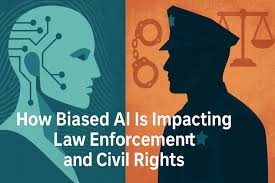

As artificial intelligence (AI) becomes more embedded in law enforcement practices, the challenge is no longer just about enhancing public safety—it’s about doing so without infringing on civil liberties. With increasing concerns about AI policing and ethical surveillance, thought leaders like Carlo are stepping forward to shape a responsible path forward.
The Rise of AI Policing
AI policing refers to the use of artificial intelligence tools in crime prediction, facial recognition, automated license plate readers, and social media monitoring. These technologies promise efficiency and predictive insights, helping departments allocate resources and respond faster. However, they also risk reinforcing systemic biases, over-policing marginalized communities, and enabling surveillance overreach.
Without strict guardrails, AI policing can lead to outcomes that clash with foundational democratic principles. That’s where Carlo’s expertise comes into play.
Carlo’s Vision: Protecting Civil Rights in the Age of AI
Carlo, a leading voice in the intersection of technology and civil rights, advocates for a framework where innovation does not come at the cost of individual freedoms. His approach to civil rights AI prioritizes transparency, accountability, and community oversight.
Carlo emphasizes that civil liberties should not be an afterthought—they must be built into the design and deployment of any AI surveillance system. This includes:
Bias Auditing: Ensuring AI systems are regularly tested for racial, gender, and socioeconomic biases.
Data Privacy Protections: Limiting data collection to what is strictly necessary and enforcing clear data retention limits.
Public Oversight: Allowing independent review boards and the public to have a say in how these technologies are used.
Ethical Surveillance Standards: Defining clear rules of engagement to prevent misuse of surveillance tools.
Ethical Surveillance is Not Optional
Ethical surveillance, as advocated by Carlo, means using technology with consent, clarity, and care. It also means law enforcement agencies must be willing to slow down and evaluate the social implications of their tools—resisting the pressure to adopt every new technology without adequate scrutiny.
In Carlo’s civil rights AI framework, there is a fundamental shift: surveillance is no longer just a tool for law enforcement but a responsibility shared with the communities it affects. The end goal is not just safety, but justice.
The Road Ahead
The conversation around AI in law enforcement is evolving rapidly. By centering voices like Carlo’s and adopting a principled approach to civil rights and technology, we can harness AI policing to serve communities without sacrificing their freedoms.
As cities and governments move forward with digital policing strategies, Carlo’s work reminds us that civil liberties and public safety are not mutually exclusive—they must go hand in hand.